
Traveling along the Mediterranean coast of France is something that has never lost its magic for me. I’ve had countless opportunities to explore France—not only the famous Paris-to-Lyon or Paris-to-Bordeaux routes, but also the shorter regional journeys that connect its sun-drenched southern cities. One route I get asked about often is: “What’s the best way to get from Marseille to Nice—by train or plane?”
I recently made this trip again, and I decided to share my first-hand experience of taking the train, complete with details about the specific train I boarded, the class of service I chose, ticket costs, and how it compared to flying. If you’re planning a trip along the Riviera and wondering which option fits your budget, schedule, or comfort level, this guide will give you everything you need.
Why This Route Matters
Marseille and Nice are two of the Mediterranean’s most iconic cities. Marseille, with its gritty yet authentic port charm, is a gateway to Provence, while Nice is the sparkling jewel of the French Riviera. The distance between them is roughly 200 kilometers (about 125 miles)—close enough for a quick hop but far enough that you need to think carefully about transportation.
On paper, flying might sound tempting. But as I’ve learned, the journey is part of the adventure, and there are hidden costs and considerations beyond just time in the air.
My Train Experience: Marseille Saint-Charles → Nice-Ville
For this trip, I chose to travel by TGV INOUI 6821, one of the high-speed services operated by SNCF.
The Route & Schedule
• Departure: Marseille Saint-Charles, 09:02 AM
• Arrival: Nice-Ville, 11:33 AM
• Duration: 2 hours 31 minutes
• Stops: Toulon, Les Arcs-Draguignan, Cannes, Antibes before rolling into Nice
It’s worth noting that not all TGV trains are direct; some TER regional trains take longer, up to 3h30.
Seat Type: Second Class vs. First Class
I’ve traveled both ways on previous trips, but this time I booked a First Class seat. Here’s why:
• Second Class: Cheaper, functional, and clean. Layout is 2+2 seating, good for budget travelers.
• First Class: Costs about 30–40% more, but the 2+1 layout means more space, quieter cars, and power sockets at every seat.
On my journey, First Class cost €48 one-way (booked three weeks in advance). A Second Class seat on the same train would have been €34.
The Onboard Experience
From the moment I sat down, I could feel the difference. The wide seat felt almost like an armchair, with plenty of legroom to stretch out. I had a table big enough for my laptop and coffee, making it easy to work while watching the coastline.
Halfway through, as the train curved past Cannes, the sparkling sea appeared through the window, dotted with yachts and fringed with palm trees. This was the kind of view you’d never get from a plane—one of the reasons I love taking the train.
Noise levels were low, even with families traveling. The carriage had a mix of professionals, tourists, and locals, all enjoying the ride in their own way. I also noticed SNCF staff coming through regularly to check tickets and assist passengers.
Ticket Costs: One-Way vs. Return
Here’s a breakdown of the fares I researched and experienced:
• One-Way Ticket (Second Class): €30–€45, depending on how early you book.
• One-Way Ticket (First Class): €45–€70, depending on demand.
• Return Ticket: Often gives slight savings. For example, I booked a return trip in advance and paid €85 for First Class return (instead of €96 if purchased as two separate singles).
👉 Tip: If you book at least 3–4 weeks in advance, you can snag the lowest fares. Same-day tickets are usually 20–30% more expensive.
Why I Preferred the Train Over Flying
I’ve flown between Marseille and Nice before (Air France and easyJet both operate this route). The flight itself is only 45 minutes, but when you add:
• Airport security (arrive 1–1.5 hours early),
• Airport transfers (Marseille airport is 25 minutes by shuttle; Nice airport is 20–30 minutes from the city center),
• Boarding and baggage claims…the total travel time ends up being 3–4 hours door-to-door.
By train:
• Station is central (Marseille Saint-Charles & Nice-Ville are both in city centers).
• No security hassle.
• Scenic views.
• Travel time: 2h30.
It’s simply more efficient and pleasant.
Other Train Options: 4 Recommended Services
Besides my TGV INOUI 6821 experience, here are four other train options worth considering:
- TGV INOUI 6827
o Departs Marseille 12:02 PM, arrives Nice 14:33 PM.
o Good midday option, ideal for travelers leaving after a morning meeting. - TGV INOUI 6831
o Departs Marseille 16:02 PM, arrives Nice 18:33 PM.
o Perfect for afternoon departures, arriving in time for dinner. - TER Regional Train
o Slower, around 3h20, but cheaper (tickets from €22).
o Good if you don’t mind extra time and want flexibility—no seat reservations required. - Night Intercités (Seasonal)
o Limited operation, slower, but can be fun if you want a budget overnight option.
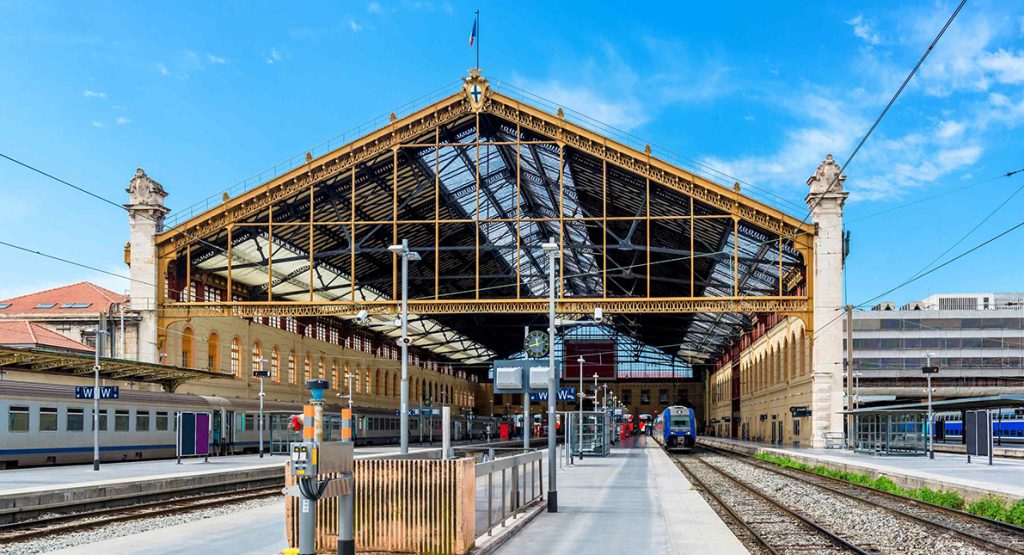
Marseille Saint-Charles Station: Starting Point
If you haven’t been to Marseille Saint-Charles, it’s worth arriving a little early:
• Services: Luggage storage, cafés, Relay convenience shops, and a Monop’ grocery.
• Location: Right in the heart of Marseille, connected to the M1 and M2 metro lines.
• Tip: The grand staircase outside offers one of the best panoramic views over Marseille’s rooftops.
Nice-Ville Station: Arrival
Arriving at Nice-Ville feels like stepping into a piece of history. The station’s Belle Époque architecture is charming, and it’s only a 15-minute walk to the Promenade des Anglais. Trams stop just outside, connecting you to Old Town, the port, and even the airport.
Booking Tips & Platforms
Over the years, I’ve tested different booking platforms. Here’s what I recommend:
- SNCF Connect
o Official site, French language interface is best, though English is available.
o Pros: Access to full range of fares, easy to modify tickets.
o Cons: Payment can sometimes be tricky for foreign cards. - Trainline
o My go-to as an English speaker.
o Shows clear comparisons, easy mobile app, supports PayPal/Apple Pay.
o Sends e-tickets directly to your phone. - Omio
o Great if you’re comparing trains with buses or flights.
o Helpful for multi-modal itineraries. - Rail Europe
o Best for non-European travelers who want to pay in home currency.
o Slight mark-up on fares, but simpler if you want to avoid card issues.
👉 Pro Tip: Book 3–4 weeks in advance for weekends or summer holidays. Fares rise quickly closer to departure.
Insider Suggestions & Tips
• Choose a Left-Hand Seat: If traveling east from Marseille, sit on the left for the best sea views after Toulon.
• Pack Snacks: The TGV has a café-bar, but prices are high (coffee €3, sandwich €6). I grabbed a fresh baguette from Marseille station beforehand.
• Luggage: No weight limits (unlike planes), but racks can fill up fast on summer weekends. Arrive early.
• Flexibility: TER regional trains don’t require seat reservations—handy if your plans change last-minute.
Plane vs. Train: My Verdict
• If you’re short on time: The train is actually faster door-to-door.
• If you value comfort and views: Train wins hands down.
• If you’re chasing ultra-low fares: Occasionally budget flights (easyJet) can be as low as €25, but once you add luggage, the train is often the same price.
For me, the train is the clear winner.
Why I’ll Keep Choosing the Train
Flying may sound faster, but when I added up the taxi rides, airport queues, waiting at gates, and baggage claims, I realized how much time I had lost in sterile terminals rather than soaking up the Mediterranean.
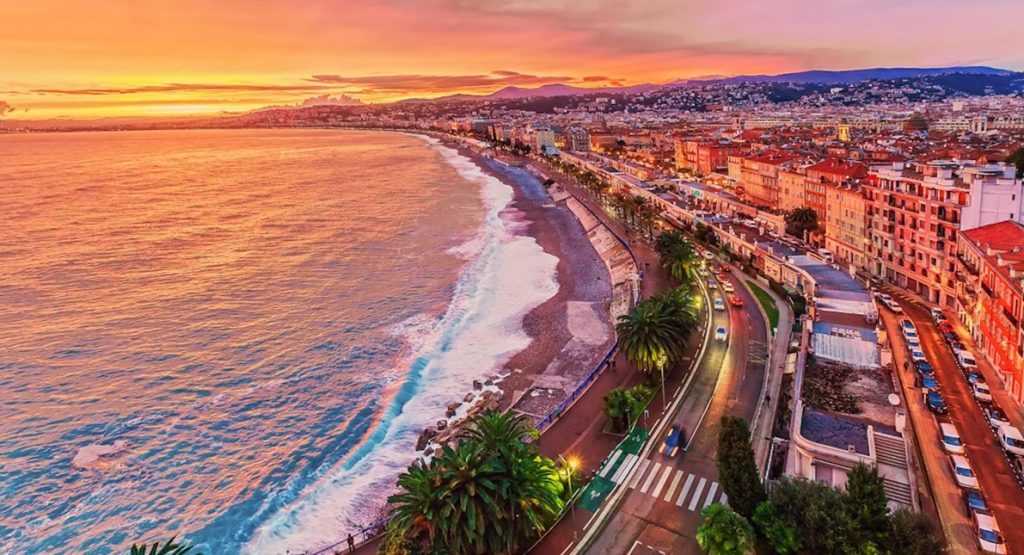
On the train, I felt connected to the land itself. Watching the coastline unfold—Toulon’s harbors, the villas of Antibes, the sparkling waters outside Cannes—was like watching a movie where I was both the audience and a character. By the time I arrived in Nice, I wasn’t just at a new destination; I was already in the rhythm of the Riviera. That kind of transition is priceless.
From a purely practical perspective, the train also makes sense. I could stretch my legs, sip coffee at my table, work on my laptop with reliable Wi-Fi, and never worry about liquid restrictions in my bag. The absence of stress was noticeable—I stepped off in Nice refreshed rather than drained.
I also appreciated the freedom of booking. With platforms like Trainline and SNCF Connect, I could choose times, compare prices, and even decide last minute if I wanted flexibility. For me, this is one of the great advantages of the train system in France—it empowers the traveler to shape the journey to their own needs.
So, what’s my verdict? If you love efficiency, comfort, and a bit of romance with your travel, take the train. If you absolutely must count every saved minute and don’t mind airport hassle, then sure, a plane might work. But I know myself: when I travel, I want the journey to feel alive, not just a means of getting from A to B.
The Marseille-to-Nice train gave me that. It gave me views that will stay in my memory, quiet moments of reflection as the Mediterranean sparkled outside, and the pure joy of stepping right into the heart of Nice ready to explore.
That’s why, the next time someone asks me, “Should I fly or take the train between Marseille and Nice?” I won’t hesitate. I’ll smile and say: Take the train, sit by the window, and let the Riviera reveal itself to you mile by mile.
Because in the end, travel is not just about where you arrive—it’s about how beautifully you get there.