
When most people think of Toulouse, they picture the Place du Capitole, the pink-hued bricks glowing in the sun, or maybe the aerospace industry that gave this city its modern nickname, La Ville Rose. I’ve found that the heartbeat of Toulouse lies not just in its squares or cafés—it lies quietly inside its museums.
I’ve been to Paris enough times to know that museums there can feel overwhelming and crowded, but Toulouse offered me a different kind of joy. It was intimate, authentic, almost like being invited into someone’s home to explore their personal treasures. And the best part? These museums aren’t always on the standard tourist trail. Many travelers rush past them, and that, my friends, is a mistake.
I want to take you through four incredible museums in Toulouse that truly blew me away. For each one, I’ll share the works that made my heart race, the ones I think every visitor should see, practical details like opening times and ticket prices, and my honest impressions—the good, the bad, and the unforgettable.
Musée des Augustins – A Cloister of Art and Calm
📍 Location: 21 Rue de Metz, 31000 Toulouse
🕒 Opening Hours: Daily 10:00–18:00, closed Tuesdays
💶 Entry Fee: €5 full price, €3 reduced, free on the first Sunday of every month.
Walking into the Musée des Augustins felt like stepping back through layers of history. The museum is housed in a former Augustinian convent dating back to the 14th century, and the cloisters alone could justify the visit. I remember walking through the Gothic arches, sunlight spilling over the stone carvings, and thinking: “If peace had an address, it would be here.”
✨ My Three Favorite Works
- Romanesque Capitals (12th century): These carved stone capitals depict biblical scenes with a raw, almost cartoonish energy. I couldn’t stop circling around them, noticing new details every time.
- Jean-Baptiste Despax’s Altarpiece (18th century): Grand, dramatic, almost theatrical—it was like Toulouse’s answer to Rome.
- Bust of Clémence Isaure: The legendary patroness of Toulouse’s poetry competitions. The sculptor gave her such a serene expression that I felt as though she was silently blessing visitors.
📌 Three Works I Recommend to Others - Eugène Delacroix’s “The Education of the Virgin”: A luminous painting tucked into a quiet corner—don’t miss it.
- Antoine Bourdelle’s sculptures: His modernist approach contrasts beautifully with the Gothic surroundings.
- The Cloister Garden itself: Not technically a “work,” but trust me, sitting here is like meditating inside history.
✅ Pros
• Peaceful atmosphere—never overcrowded.
• Inexpensive entry with free Sundays.
• Central location, a 10-minute walk from Capitole.
❌ Cons
• Limited English explanations (bring a guidebook or download the app).
• Some rooms under renovation during my visit.
🚇 Getting There
From Toulouse-Matabiau Station, I walked 15 minutes along Rue de Metz. Alternatively, take Metro line A to Esquirol and it’s a short walk.
Musée Saint-Raymond – Toulouse’s Roman Soul
📍 Location: 1 Place Saint-Sernin, 31000 Toulouse (next to the Basilica of Saint-Sernin).
🕒 Opening Hours: Daily 10:00–18:00, closed Mondays.
💶 Entry Fee: €5 standard, €3 reduced, free for under-18s and on first Sundays.
I’ve always had a soft spot for archaeology, so when I heard Toulouse had a Roman past, I knew the Musée Saint-Raymond was calling me. The museum sits right next to the magnificent Basilica of Saint-Sernin, and honestly, I nearly missed it because the basilica stole all the attention. But once inside, it became one of my favorite surprises in Toulouse.
✨ My Three Favorite Works
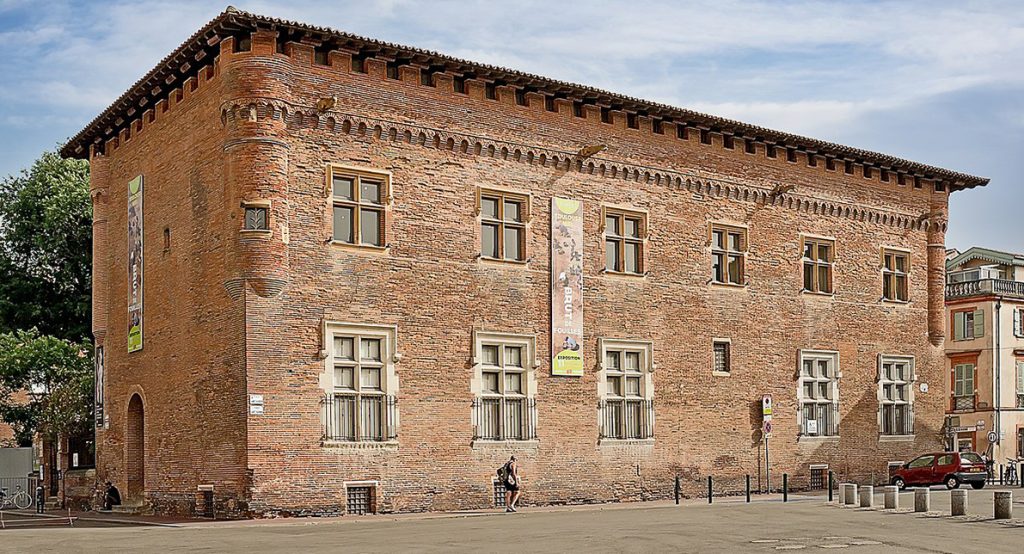
- Mithras Slaying the Bull (3rd century): A relief of the cult god Mithras—it made me think about the mystery religions that thrived here long before Christianity.
- Roman Sarcophagi in the basement crypt: Walking among them gave me chills, like brushing against the ancient breath of the city.
- Head of Augustus: Seeing the emperor’s face in marble, right here in Toulouse, connected the city to Rome’s vast empire.
📌 Three Works I Recommend - The funerary steles: Everyday Romans leaving their mark—more moving than the emperors.
- Collection of Roman coins: Tiny, intricate, and a perfect link between daily life and empire.
- Interactive model of Roman Toulouse (Tolosa): Great for understanding how the city once looked.
✅ Pros
• Fascinating Roman artifacts.
• Right next to Saint-Sernin—two visits in one stop.
• Affordable entry.
❌ Cons
• Exhibits are compact—don’t expect a giant Louvre-style collection.
• Some signage in French only.
🚇 Getting There
I took Metro line B to Compans-Caffarelli and walked 10 minutes. Easy and scenic.
Les Abattoirs – The Contemporary Pulse
📍 Location: 76 Allées Charles de Fitte, 31300 Toulouse
🕒 Opening Hours: Wednesday–Sunday 12:00–18:00 (late opening Thursday until 20:00).
💶 Entry Fee: €8 full price, €4 reduced, free under 18, free on first Sunday monthly.
After two days of medieval cloisters and Roman marbles, I was ready for something completely different. Les Abattoirs, a former slaughterhouse turned contemporary art museum, delivered a cultural shock—in the best way possible. The industrial building, with its high ceilings and raw energy, is now home to bold, challenging modern works.
✨ My Three Favorite Works
- Picasso’s “The Massacre in Korea” (1951): The museum’s crown jewel. Standing in front of it, I felt the weight of history, war, and Picasso’s uncompromising style.
- Niki de Saint Phalle’s colorful sculptures: Joyful, irreverent, and playful—an antidote to the heaviness of Picasso.
- Local Toulouse artists’ installations: One piece used sound and light to mimic the Garonne River, and I stood mesmerized.
📌 Three Works I Recommend - Jean Dubuffet’s works: His raw, almost childlike style challenges expectations.
- Temporary exhibitions: Always rotating, so check the schedule.
- The sculpture garden outside: Free, and perfect for a sunny afternoon.
✅ Pros
• Internationally recognized contemporary collection.
• Great mix of permanent and temporary exhibits.
• Affordable ticket, plus free days.
❌ Cons
• Contemporary art isn’t for everyone—can feel abstract or confusing.
• Café was overpriced during my visit.
🚇 Getting There
I hopped on Tram T1 and got off at Palais de Justice, then walked 8 minutes.
Muséum de Toulouse – Natural Wonders in the Pink City
📍 Location: 35 Allée Jules Guesde, 31000 Toulouse
🕒 Opening Hours: Tuesday–Sunday 10:00–18:00, closed Mondays.
💶 Entry Fee: €7 full, €5 reduced, free for under 6.
As a child, I adored natural history museums. That sense of wide-eyed wonder never really leaves you, and the Muséum de Toulouse reminded me of why I travel in the first place. This isn’t just a place for kids—it’s for anyone who wants to reconnect with curiosity.
✨ My Three Favorite Works
- Full-size whale skeleton: Towering over me like a giant spirit of the sea.
- Dinosaur fossils: Including a massive triceratops skull—pure childhood magic.
- Biodiversity Hall: Displays of animals from across the globe, beautifully arranged.
📌 Three Works I Recommend - The evolution exhibit: A clear, interactive explanation of life’s journey.
- Mineral collection: Sparkling geodes and crystals from the Pyrenees.
- Temporary exhibitions: During my visit, one on climate change was eye-opening.
✅ Pros
• Family-friendly but equally engaging for adults.
• Well-designed exhibitions with interactive features.
• Great café and outdoor garden.
❌ Cons
• Can be crowded with school groups on weekdays.
• Slightly outside the main tourist center.
🚇 Getting There
From Capitole, I took Metro line B to François Verdier and walked 12 minutes through a leafy boulevard.
🎟️ Booking, Discounts, and Tips
• Where to Book: Most tickets can be bought directly at the museum entrance, but I found it easier to use the official Toulouse Tourism Office website.
• Discounts: Many museums are free on the first Sunday of every month. Students, EU residents under 26, and teachers often qualify for reductions.
• Passes: Consider the Toulouse City Pass (€18 for 24 hours, €28 for 48 hours, €35 for 72 hours), which includes free entry to many museums plus public transport.
• Opening Times: Most close Mondays or Tuesdays, so plan accordingly.
🌟 Exploring these four museums—Musée des Augustins, Musée Saint-Raymond, Les Abattoirs, and the Muséum de Toulouse—was like walking through the soul of the city, layer by layer. The Gothic serenity of the Augustins, the Roman ghosts of Saint-Raymond, the bold screams of Picasso at Les Abattoirs, and the childlike wonder of the Muséum—they all came together to remind me why I fell in love with travel in the first place.
Toulouse is not just aerospace, not just pink bricks, not just cassoulet. It’s a city that carries its history and creativity in the walls of its museums. If you want to understand it beyond the postcard, go step inside.
And here’s my little piece of advice: take your time. Don’t rush. Sit in the cloisters. Breathe in front of a Roman sarcophagus. Let Picasso disturb you. Let the dinosaur bones make you feel small. Because in that pause, in that openness, Toulouse whispers its secrets.