
More Than Just Shopping Bags
When I first arrived in Marseille, I had no intention of spending hours in shopping centers or haggling in markets. My plan was simple: walk along the Old Port, eat bouillabaisse, take a ferry to the Frioul Islands, and maybe climb up to Notre-Dame de la Garde. Shopping wasn’t exactly high on my list.
But Marseille had other plans for me.
The city’s identity is tied to its role as a gateway to the Mediterranean. Over centuries, ships brought spices, textiles, and traditions from across the sea. Walking through its streets, you quickly realize that buying a souvenir here isn’t like buying a magnet at an airport gift shop. It’s a way of taking home a little piece of that cross-cultural story.
I’ll share my deep dive into shopping in Marseille: the four modern shopping centers I explored (each with its own personality) and the two traditional markets that stole my heart. I’ll also walk you through what I bought, what I regretted not buying, and practical tips on navigating everything from sales seasons to bargaining etiquette.
By the end, you’ll know not only where to shop but also how to shop like a Marseillais.
Part One: Modern Shopping Centers
Les Terrasses du Port – Shopping With a Sea View
Address: 9 Quai du Lazaret, 13002 Marseille
Hours: Daily, 10 AM – 8 PM
The first time I entered Les Terrasses du Port, I was almost distracted from shopping altogether. Imagine a massive terrace that opens up directly to the Mediterranean, with panoramic views of ferries leaving the harbor. Honestly, it felt like shopping inside a cruise ship.
• My experience: I started my day with coffee at Starbucks (yes, I know, cliché, but the view makes it worthwhile). I then wandered through Zara, Sephora, and Apple, but the real gem for me was Maison Empereur Corner. There, I picked up a bottle of artisanal olive oil for €15, beautifully packaged in a tin that now sits proudly in my kitchen.
• Pros: The sea views, wide mix of stores, excellent restaurants on the upper level (I recommend Big Fernand for gourmet burgers). Free Wi-Fi everywhere.
• Cons: Weekends get crowded. Parking is pricey (about €3/hour).
• Discounts: During les soldes d’été (summer sales in July), I scored a pair of Solaris sunglasses at 30% off.
• Pro tip: Download their mobile app before visiting—it lists real-time discounts and events.
Centre Bourse – History Meets Shopping
Address: 17 Cours Belsunce, 13001 Marseille
Hours: 10 AM – 7:30 PM (Mon–Sat)
I stumbled into Centre Bourse by accident while wandering from the Old Port. At first glance, it looked like a typical city-center mall. But then I discovered that inside, there’s the Musée d’Histoire de Marseille, with actual Roman ruins! Imagine shopping for Marseille soap, then stepping into an exhibit of ancient boats.
• My experience: I bought a bundle of Savon de Marseille from La Savonnerie de Marseille. A set of four soaps cost €12, with a 10% discount for buying multiple. They even explained the difference between traditional olive oil soap (72% olive oil) and newer scented varieties.
• Pros: Central location, museum access, strong local focus. Great place for a rainy day.
• Cons: It feels a bit dated compared to Les Terrasses. Not as glamorous.
• Service: The soap shop staff were incredibly patient, answering all my nerdy questions about soap-making traditions.
• Pro tip: Centre Bourse is excellent for tax refund services—non-EU visitors can easily reclaim VAT.
Les Docks Village – Industrial Chic and Local Designers
Address: 10 Place de la Joliette, 13002 Marseille
Hours: Shops 10 AM – 7 PM, restaurants open later
If you want shopping with character, Les Docks Village is unbeatable. The building is a 19th-century dock warehouse, now filled with trendy boutiques and cafés.
• My experience: I bought a handmade notebook from La Papeterie (€20) with a Marseille street art cover. Later, I grabbed tapas at Les Halles de la Major, a food hall just next door.
• Pros: Beautiful architecture, strong focus on local designers, plenty of photo opportunities.
• Cons: Smaller than a standard mall; fewer international brands.
• Discounts: Pop-up stores often offer launch discounts (10–20%). I lucked out at a jewelry pop-up with a 15% opening discount.
• Service: Warm, friendly, and more like a community space than a commercial center.
• Pro tip: Follow them on Instagram for event updates; I caught a mini art fair this way.
Grand Littoral – The Giant
Address: 11 Avenue de Saint-Antoine, 13015 Marseille
Hours: 10 AM – 8 PM
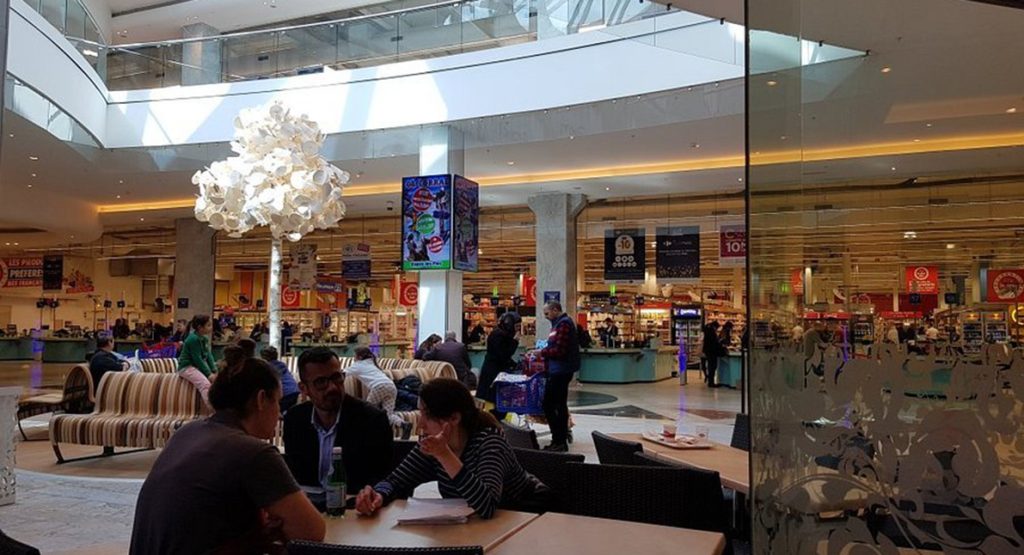
Grand Littoral is one of the largest malls in southern France, and I have to admit—it overwhelmed me at first. With over 200 stores, it’s a paradise for families and anyone who wants everything in one place.
• My experience: I bought a toy set for €25 at JouéClub for a friend’s kid. They even gave me a €5 voucher for my next visit.
• Pros: Free parking, variety of stores, family-friendly.
• Cons: Located outside the city center; taxi cost me €25 from Vieux-Port.
• Discounts: Check their official website for printable vouchers—10–15% off selected stores.
• Pro tip: Plan at least half a day here; it’s not a quick stop.
Part Two: Traditional Markets
Marché de Noailles – The Spice of Life
Address: Rue du Marché des Capucins, 13001 Marseille
Hours: Mornings until early afternoon
If there’s one place that captures Marseille’s multicultural soul, it’s Marché de Noailles. The smells—coriander, cumin, mint, grilled meats—transported me straight to North Africa.
• My experience: I bought ras el hanout (Moroccan spice blend) for €5, plus a hand-painted ceramic bowl (€12). One vendor even gave me a couscous recipe!
• Pros: Authentic, lively, cheap.
• Cons: Can feel chaotic; keep an eye on your belongings.
• Service: Vendors are enthusiastic and love to share recipes or stories.
• Pro tip: Bargain politely—if you buy multiple items, most sellers will drop the price a little.
Marché du Prado – The Everyday Market
Address: Boulevard du Prado, 13008 Marseille
Hours: Tuesday–Sunday mornings
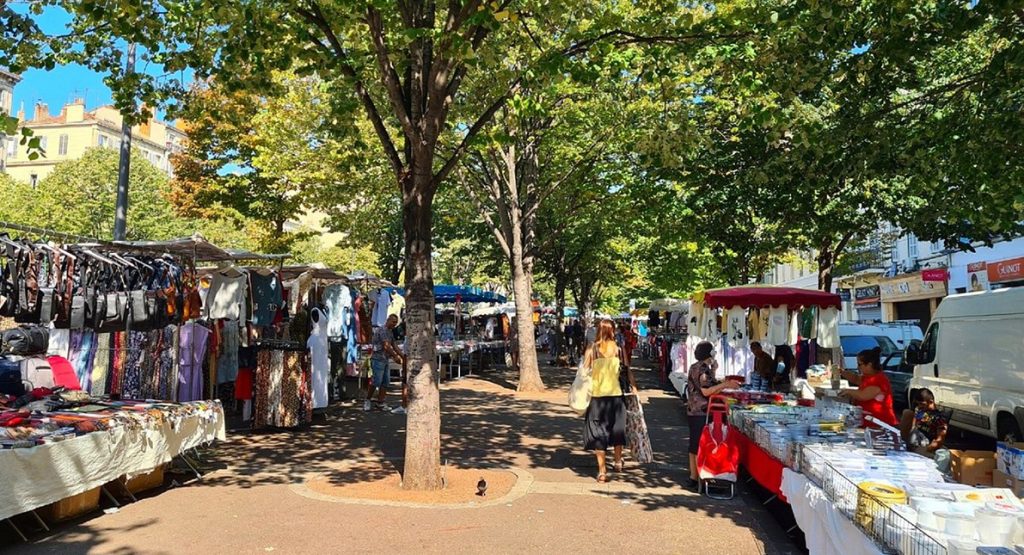
Unlike Noailles, the Marché du Prado feels calmer and more local. It stretches along a wide boulevard, filled with clothes, textiles, and household goods.
• My experience: I bought a Provence cotton scarf (€18) and lavender sachets (€10 for three). Prices were lower than in tourist shops.
• Pros: Spacious, less overwhelming, affordable.
• Cons: Less artisan-focused—more practical goods.
• Pro tip: Arrive before noon; many stalls start packing up early.
Souvenirs to Look For
• Savon de Marseille: Genuine soap (look for 72% olive oil). €3–€6 per bar.
• Olive Oil & Tapenade: Easy to find in malls and markets.
• Ceramics & Provençal Textiles: Colorful, durable, perfect for gifts.
• Herbs & Spices: Lightweight, flavorful reminders of Marseille.
• Wine & Pastis: Heavy but worth it if you have luggage space.
Practical Tips for Shoppers
- Sales Seasons: The official les soldes happen twice a year—January and July. Discounts can go up to 70%.
- Payment: Cards are widely accepted in malls, but bring cash for markets.
- Bargaining: Acceptable at traditional markets but not in malls.
- Tax Refunds: Non-EU visitors spending over €100 in one store can claim VAT refunds.
- Transport: Take the metro to Noailles (Line 2) or Prado (Line 2). For malls, trams and buses are convenient.
A Suggested 3-Day Shopping Itinerary
• Day 1: Start at Centre Bourse, visit the museum, then head to Les Terrasses du Port for sunset shopping and dinner.
• Day 2: Explore Les Docks Village for boutique finds, then relax at cafés nearby.
• Day 3: Spend your morning at Marché de Noailles, grab a spice-laden lunch, and finish with lavender shopping at Prado.
Taking Marseille Home With You
When I finally packed my suitcase in Marseille, it wasn’t just full of soaps, scarves, and spices—it was full of memories. Each item I tucked away carried with it a moment, a face, a conversation. The ceramic bowl from Noailles still smells faintly of cumin. The lavender sachets from Prado now sit between my sweaters, reminding me of a warm Provençal summer breeze every time I open the drawer. Even the designer notebook I picked up at Les Docks Village makes writing my travel notes feel more personal, more anchored to a place that values both tradition and reinvention.
Marseille taught me that shopping can be so much more than a transaction. In this city, it becomes a dialogue—between old and new, between local artisans and international brands, between Mediterranean traditions and global trends. To wander through its malls and markets is to experience the city’s living identity, as layered and vibrant as the spices at Noailles or the textiles at Prado.
Why These Souvenirs Matter
Travel often passes by in a blur—the meals, the sights, the sunsets. Souvenirs become anchors, tiny pieces of evidence that what you saw and felt was real. My tin of olive oil will be finished in a few months, but the ritual of pouring it into a pan will always remind me of Marseille’s terraces overlooking the sea. My scarf will eventually wear thin, but every time I wrap it around my shoulders, I’ll remember the friendly vendor who insisted I “smell the lavender first.”
These items are, in a way, portable memories. They bring Marseille into my everyday life long after my boarding pass has been scanned.
A Final Word of Advice
If you’re planning your own trip to Marseille, my advice is simple:
• Give yourself time. Don’t rush your shopping into a single afternoon. Let yourself wander.
• Balance the modern and the traditional. The malls will give you convenience and comfort; the markets will give you color and authenticity.
• Shop with your senses. Smell the soap, taste the olive oil, feel the textiles. Shopping here is as much about the experience as the purchase.
• Talk to the vendors. The stories they tell often become just as valuable as the items you buy.
Why I’ll Return
As I left Marseille, I knew I would be back—not just for the food, the sea, or the history, but for the thrill of discovery hidden in its shops and markets. The city makes shopping feel like an adventure, where every turn of a corner could reveal a spice I’ve never smelled before, a textile pattern I’ve never seen, or a view over the Mediterranean that takes my breath away all over again.
So, when you come to Marseille, don’t just plan your museums, your hikes, or your meals. Leave space in your itinerary—and your suitcase—for the treasures of its markets and shopping centers. Because here, what you bring home isn’t just an object. It’s a story.
And in the end, isn’t that the best souvenir of all?