
Falling for Montpellier Unexpectedly
When I first booked my trip to Montpellier, I’ll admit—it wasn’t at the very top of my French bucket list. Paris, Bordeaux, Lyon… those are the names that usually dominate itineraries. Montpellier, with its Mediterranean vibes, student culture, and history dating back to the Middle Ages, felt more like a “hidden gem.” What I didn’t realize was just how quickly this city would steal my heart. It’s not as overwhelming as Paris, not as wine-obsessed as Bordeaux, but it has its own carefree rhythm, a mix of southern French charm and Mediterranean ease.
If it’s your first time visiting, I want to help you skip some of the mistakes I made and jump right into enjoying yourself. These are the tips I wish I knew beforehand, covering everything from what to pack, how to use the tram system, how to budget, which street food is safe, and even how to structure a perfect five-day itinerary.
Packing for Montpellier: What I Wish I Had (and What I Didn’t Need)
Montpellier’s Mediterranean climate makes packing both easy and tricky. Easy because the weather is generally mild and sunny. Tricky because it can flip between hot days and breezy evenings.
Essentials I Recommend:
• Comfortable walking shoes: Montpellier’s Écusson (the medieval old town) is all cobblestones, winding alleys, and hidden squares. My sneakers were my savior. Heels would’ve been torture.
• Light layers: A breathable t-shirt during the day, but a light jacket or cardigan for evenings. Even in summer, the sea breeze cools things down.
• Sun protection: Sunglasses, a wide-brim hat, and SPF 50 sunscreen. I underestimated the Mediterranean sun on my first day and looked like a lobster in photos.
• Reusable water bottle: Many public fountains are safe to drink from.
• Daypack: For carrying maps, snacks, and the inevitable souvenirs.
Things I Overpacked:
• Formal wear: Montpellier is chic but not pretentious. Even at nice restaurants, smart-casual was perfectly fine.
• Umbrella: Rain is rare but comes in bursts. A lightweight raincoat is better.
Dressing Like a Local
Montpellier has a huge student population (thanks to one of Europe’s oldest universities) so the fashion vibe is relaxed but trendy. Think light fabrics, linen shirts, chic sneakers, and tote bags.
I felt most comfortable in jeans, a simple blouse, and a scarf—a combination that let me blend in while still looking put together. Shorts and flip-flops screamed “tourist.”
Weather in Montpellier: What to Expect
One of the joys of Montpellier is its climate. It averages over 300 days of sunshine a year.
• Summer (June–August): Hot, dry, with temps up to 34°C (93°F). Great for beach trips (Palavas-les-Flots is only 20 minutes away), but bring sunblock.
• Spring (April–May) & Autumn (September–October): My favorite time. Warm days (22–28°C / 72–82°F), cooler nights, and fewer crowds.
• Winter (November–February): Mild compared to northern France. Around 10–15°C (50–59°F). Still sunny but bring a warm jacket.
👉 Tip: If you’re heat-sensitive, avoid August. The city gets crowded with French holidaymakers and the sun can feel punishing.
Understanding Montpellier’s Culture
Montpellier is a blend of old and new: medieval alleys, Haussmann-style boulevards, and futuristic architecture like Antigone. It’s also one of the most youthful cities in France, thanks to its student population.
• Café culture is big. People linger over coffee at Place de la Comédie, the city’s main square.
• Markets are lively. Marché des Arceaux and Marché Castellane are full of fresh produce, cheeses, and olives.
• Art thrives. Street performers, musicians, and art students give the city a creative buzz.
As a visitor, I felt welcomed. Unlike in Paris, locals seemed more relaxed and open to chatting—even if my French wasn’t perfect.
Money Matters: Currency Exchange and Budgeting
Montpellier uses the Euro (€), like the rest of France.
• ATMs (DAB in French): Widely available. I found better exchange rates withdrawing directly from ATMs rather than exchanging cash at bureaux de change.
• Credit cards: Accepted nearly everywhere, even small cafés. Just check for “CB” (Carte Bancaire) signs.
• Daily Budget:
o Budget traveler: €50–70/day (hostels, street food, tram).
o Mid-range: €100–150/day (3-star hotel, restaurant meals, tram + occasional taxi).
o Luxury: €200+/day.
👉 Tip: Montpellier is cheaper than Paris or Lyon. A coffee is usually €2–3, and a three-course lunch menu at a brasserie is around €20.
Getting Around: Trams, Buses, and More
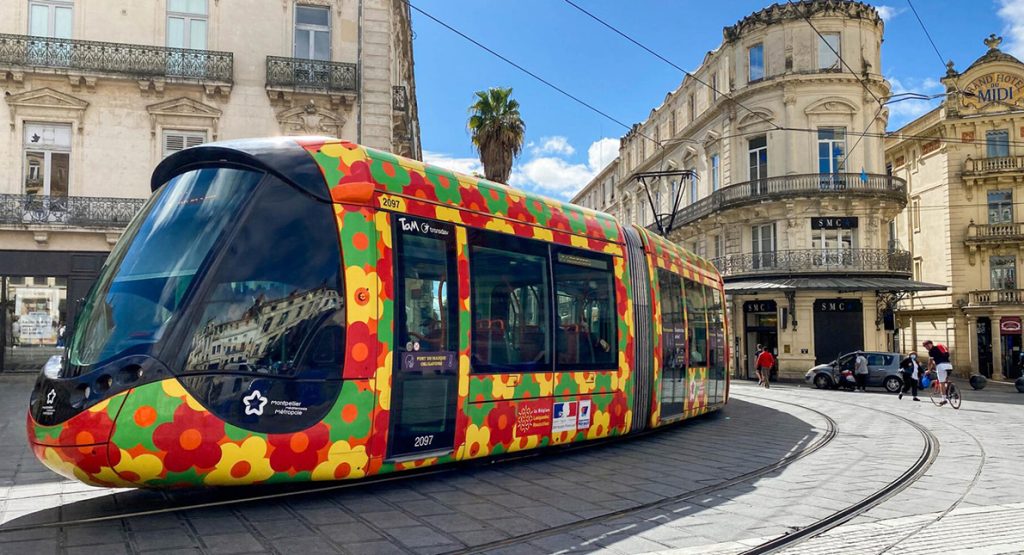
Montpellier doesn’t have a metro, but its tram system is one of the best in France. Designed by famous artists (Christian Lacroix designed Line 3), the trams are colorful and efficient.
Tram System
• Lines: 4 main lines cover most of the city (Line 1: blue with white swallows, Line 2: flowers, Line 3: sea creatures, Line 4: golden).
• Tickets: €1.60 per ride, valid for 1 hour with transfers.
• Day Pass: €4.30 unlimited rides. A lifesaver for sightseeing.
• Where to Buy: Ticket machines at tram stops (accept cards/coins), or via the TaM app.
Tram Card
• TaM Card: If you’re staying a week or more, consider a rechargeable card.
• Weekly pass: €15.
• Monthly pass: €52.
👉 Comparison with Paris Metro: Paris’s system is larger but confusing. Montpellier’s trams are simpler, cleaner, and less crowded.
Buses
Complement the trams. Same ticket system. Handy for reaching outer neighborhoods.
Biking
Montpellier is bike-friendly. The Vélomagg’ system lets you rent bikes from €0.50/hour.
Street Food and Safety Tips
Montpellier isn’t Paris when it comes to street food, but it has some gems.
Must-Try Street Eats
- Fougasse d’Uzès – A sweet bread with orange blossom, perfect for breakfast.
- Tapenade sandwiches – Olive paste spread on fresh baguette.
- Socca (chickpea pancake) – More Niçoise than Montpellier, but found in markets.
👉 Safety Tip: Stick to busy markets (like Marché des Arceaux). Avoid unlicensed vendors near the train station at night.
Staying Connected: Getting a Local SIM
Roaming charges can be brutal. I recommend buying a French SIM.
• Orange Holiday SIM: €39.99, 20GB data, valid for 14 days. Sold at Montpellier airport and Orange stores.
• SFR & Bouygues Telecom: Slightly cheaper, around €20 for 10GB.
• Free Mobile: €19.99/month for 150GB (if you can sign up in-store).
👉 Pro Tip: Buy at a physical store. Vending machines at airports sometimes charge more.
My Suggested 5-Day Mini Itinerary
Day 1: Old Town & Place de la Comédie
• Wander Écusson’s medieval streets.
• Visit Saint-Pierre Cathedral.
• Evening at Place de la Comédie with dinner at Le Petit Jardin.
Day 2: Museums & Art
• Fabre Museum (17th–19th century European art).
• Pavillon Populaire (photography exhibits).
• Dinner at L’Endroit (great value set menus).
Day 3: Nature & Relaxation
• Stroll Jardin des Plantes (oldest botanical garden in France).
• Picnic at Parc du Peyrou.
• Sunset at Arceaux Aqueduct.
Day 4: Day Trip to the Coast
• Tram + bus to Palavas-les-Flots beach.
• Try seafood at Le Poisson Rouge.
• Evening gelato on the promenade.
Day 5: Markets & Modern Montpellier
• Morning at Marché des Arceaux.
• Explore Antigone’s modern architecture.
• Last-minute shopping on Rue de la Loge.
Budget Adjustments: Splurge or Save?
• Splurge Worthy: A fine dining meal (€70–100) at Jardin des Sens.
• Save: Picnic lunches from markets—fresh bread, cheese, fruit for under €10.
Day Trips Worth Taking
- Sète: 30 minutes by train. Canals, seafood, and poetry festivals.
- Nîmes: Roman amphitheater and Maison Carrée.
- Camargue: Wild horses, flamingos, and salt marshes.
Travel Insurance: Don’t Skip It
I always recommend insurance, especially in Europe. For this trip, I used Allianz Travel Insurance.
• Plan: Allianz Global Assistance Single Trip.
• Cost: Around €40 for a week.
• Coverage: Medical emergencies up to €1M, trip delays, baggage loss.
• My Experience: I didn’t need to claim in Montpellier, but Allianz reimbursed me quickly on a past trip when a delayed flight caused me to miss a connection.
Why Montpellier Stole My Heart (and Why I’ll Return)
Montpellier surprised me in all the best ways. I had expected a small, pretty university town with sunshine and a tram system, but what I found was so much more—a place where history whispers through cobbled streets, where every café table feels like an invitation to slow down, and where art, nature, and Mediterranean energy come together in a way I hadn’t felt elsewhere in France.
I often measure cities by the moments they give me, and Montpellier gave me plenty:
• Watching the orange-pink glow of sunset spread across Place Royale du Peyrou, while children ran around the aqueduct arches and couples shared picnics on the grass.
• Biting into a freshly baked fougasse at Marché des Arceaux, with the smell of herbs, olives, and sea breezes mingling in the morning air.
• Cycling through Antigone, marveling at the futuristic buildings, then turning a corner and stumbling into a medieval alley where time seemed to have stopped.
• Ending my evenings at Place de la Comédie, where the rhythm of life slowed, and I felt I could just sit for hours, sipping rosé, people-watching, and soaking in the southern joie de vivre.
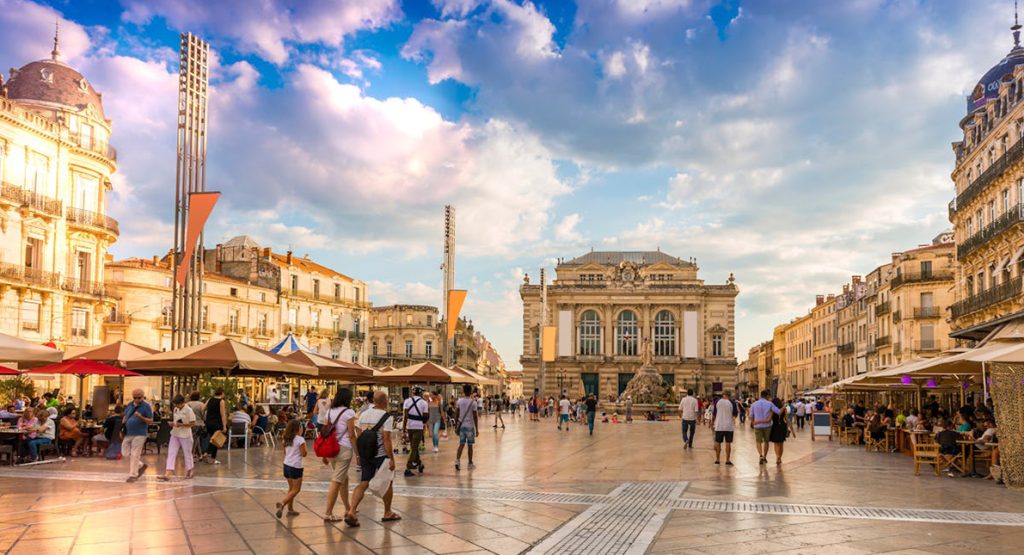
What I truly loved was Montpellier’s balance. It doesn’t overwhelm like Paris, but it doesn’t bore either. It has just enough history to intrigue, just enough modernity to feel vibrant, and just enough coastline nearby to tempt you into lazy seaside escapes. It’s a city where students, artists, families, and travelers all mix, giving it a pulse that’s both young and timeless.
If you’re traveling on a budget, Montpellier will treat you kindly with affordable tram tickets, reasonably priced restaurants, and lively markets. If you’re traveling to indulge, it will reward you with luxury dining, boutique hotels, and cultural experiences that rival larger French cities. And if you’re like me—somewhere in the middle—you’ll find it easy to adjust your budget, splurge occasionally, and still feel like you’re living well.
More than anything, Montpellier taught me that smaller cities can leave bigger impressions. I went with low expectations, and I left making a promise to myself: to come back, maybe in spring when the Jardin des Plantes is in full bloom, or in autumn when the light softens and the tourist crowds thin out.
If you’re heading to Montpellier for the first time, my advice is simple:
• Embrace the pace. Don’t rush through the city; let yourself wander and get lost in the medieval streets.
• Trust the trams. They’re colorful, efficient, and make exploring easy.
• Eat at the markets. The city’s flavors reveal themselves best through fresh bread, local cheeses, and seasonal fruit.
• Take at least one day trip. Whether to Sète, Nîmes, or the Camargue, the region surrounding Montpellier is as magical as the city itself.
• Protect your trip. With insurance, a SIM card, and a flexible itinerary, you’ll enjoy with peace of mind.
As I packed my bag on my last morning, I realized Montpellier had quietly climbed into my list of places I’d recommend to anyone who wants a different French experience—not the grandeur of Paris, not the wine-centric aura of Bordeaux, but something uniquely Mediterranean, youthful, and effortlessly charming.
For me, Montpellier was more than a stop—it became a reminder that travel is about being surprised. And trust me, Montpellier will surprise you too.